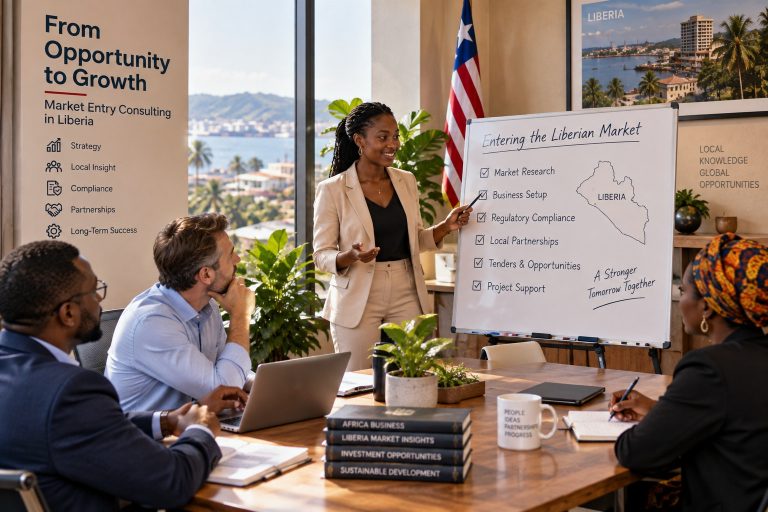
Introduction:
Executing projects in Liberia presents significant opportunities, particularly in sectors such as infrastructure, development programs, and private sector investments. However, successful project delivery depends on more than technical capability.
Organizations must navigate regulatory processes, coordinate with institutions, and manage on-ground operations effectively. This is where working with a reliable local partner becomes essential.
Why Local Partnerships Matter for Projects in Liberia
Executing a project in Liberia can involve more than technical planning and project management. International companies, contractors, NGOs and development organisations may also need to understand local procedures, coordinate with institutions and manage activities on the ground.
Depending on the project, procurement method and applicable requirements, working with a reliable local partner can provide practical support with coordination, procurement, stakeholder engagement and project implementation.
A local partner can help an organisation understand the local operating environment while providing on-ground support when it is needed most.
What Does a Local Partner Do?
A local partner can support different parts of a project, depending on what the organisation needs and what has been agreed between both parties.
This may include:
On-ground operational support
Institutional coordination
Local facilitation
Procurement and tender support
Stakeholder engagement
Project implementation assistance
For example, a local partner may help coordinate teams, communicate with local institutions, manage day-to-day activities and support procurement processes. When specialist procurement support is needed, organisations can also work with a Procurement Consultant in Liberia to help with tendering and procurement requirements.
The role of a local partner can vary from project to project. For this reason, it is important to agree on responsibilities, deliverables and reporting arrangements from the start. A local partner is not automatically a legal agent, registered representative, joint-venture partner or subcontractor. The specific relationship should be clearly defined in the relevant agreement or contract.
Key Challenges in Project Execution in Liberia

Organisations working on projects in Liberia may need to manage several practical challenges, particularly when they are unfamiliar with the local operating environment.
Complex Regulatory Processes
Depending on the sector and project structure, organisations may need to understand different registration, licensing, procurement or compliance requirements.
The exact requirements can vary depending on the nature of the project and the applicable Liberian regulations.
Delays in Approvals and Documentation
Incomplete documentation or unclear responsibilities can slow down administrative processes and affect project timelines.
Having someone who understands the relevant local procedures can help the project team identify documentation requirements and follow up on outstanding matters.
Coordination With Multiple Stakeholders
Projects may involve government ministries, regulatory bodies, public institutions, contractors, suppliers, development partners and other stakeholders.
Managing communication between different parties can become more difficult when the main project team is based outside Liberia.
Limited Understanding of Institutional Procedures
International organisations that are new to Liberia may not be familiar with how particular local processes work.
Local knowledge can help project teams understand the operating environment and communicate more effectively with relevant stakeholders.
How a Local Partner Helps Overcome These Challenges
1. Navigating Regulatory Processes
Local partners understand:
- Licensing requirements
- Approval procedures
- Compliance expectations
- Registration and documentation
They can also help coordinate relevant paperwork and follow up on administrative processes, helping reduce delays during project execution.
2. Institutional Coordination
Projects often require engagement with:
- Government ministries
- Regulatory bodies
- Public institutions
- Local authorities
A local partner can support structured communication, coordinate meetings and follow up on agreed actions with relevant institutions.
3. Stakeholder Management
Effective communication with stakeholders is essential.
Local partners help:
- Align expectations
- Manage communication
- Resolve issues proactively
4. Operational Support
On-ground support may include:
- Coordinating teams
- Managing logistics
- Supporting local suppliers and contractors
- Addressing operational challenges
- Monitoring local project activities
This can help maintain better coordination and continuity throughout project implementation.
Why Local Expertise Matters
Local expertise can provide practical knowledge of the operating environment, institutional processes and on-ground project conditions.
For an organisation entering Liberia for the first time, this knowledge can help with:
- Practical understanding of local processes
- Insight into institutional expectations
- Knowledge of on-ground project conditions
- Better coordination with local stakeholders
- Faster identification of potential operational issues
Local expertise can also be valuable for technology-related projects. For example, organisations looking for IT consultancy in Liberia may benefit from local support when coordinating IT infrastructure, technology implementation, vendors or on-ground technical requirements.
When Do You Need a Local Partner?

You should consider working with a local partner when:
- Entering Liberia for the first time
- Participating in government or donor-funded projects
- Managing complex, multi-stakeholder projects
- Requiring on-ground execution support
How Tangerine Consultancy Supports Project Execution in Liberia
Tangerine Consultancy provides local project support for organisations operating or planning projects in Liberia. Organisations looking for local consulting support can also explore our guide to top consulting firms in Liberia to better understand the local consulting landscape and available expertise.
Depending on project requirements, support can include:
- Subcontract support and project implementation
- Local facilitation and coordination
- Procurement and bid support
- Project execution assistance
- Local representation and liaison
The role can be tailored to the scope of the project, from local coordination and facilitation to defined implementation support.
For organisations that need additional support with a specific project requirement, explore Tangerine Consultancy’s relevant Subcontract & Project Implementation Services, Local Facilitation Services, Bid & Tender Consultancy, and Representation & Liaison Services
Conclusion
Projects in Liberia require more than planning — they require effective execution within a structured institutional environment. Working with a reliable local partner helps organizations navigate challenges, improve coordination, and ensure successful project delivery. For organizations entering Liberia or executing complex projects, local partnership is not just helpful — it is essential.
FAQ
Why do I need a local partner in Liberia?
A local partner helps navigate regulatory processes, coordinate stakeholders, and provide on-ground support for project execution.
What does a local partner do in project implementation?
A local partner assists with compliance, coordination, operational support, and stakeholder engagement during project execution.
Can international companies execute projects without local support?
While possible, it is challenging due to regulatory, institutional, and operational complexities.
How does local expertise improve project success?
Local expertise helps resolve issues quickly, ensure compliance, and improve coordination, leading to better project outcomes.
How do I choose a local partner in Liberia?
A local partner should have relevant experience, strong regulatory knowledge, reliable local networks, clear communication, and proven capabilities to provide effective on-ground project support.
What is the difference between a local partner and a subcontractor?
A local partner provides broader local knowledge and coordination, while a subcontractor is hired to perform specific tasks or project work under an agreed scope.
What should be included in a local partnership agreement?
A local partnership agreement should clearly define roles, responsibilities, scope of work, payment terms, compliance requirements, confidentiality, and dispute resolution procedures.